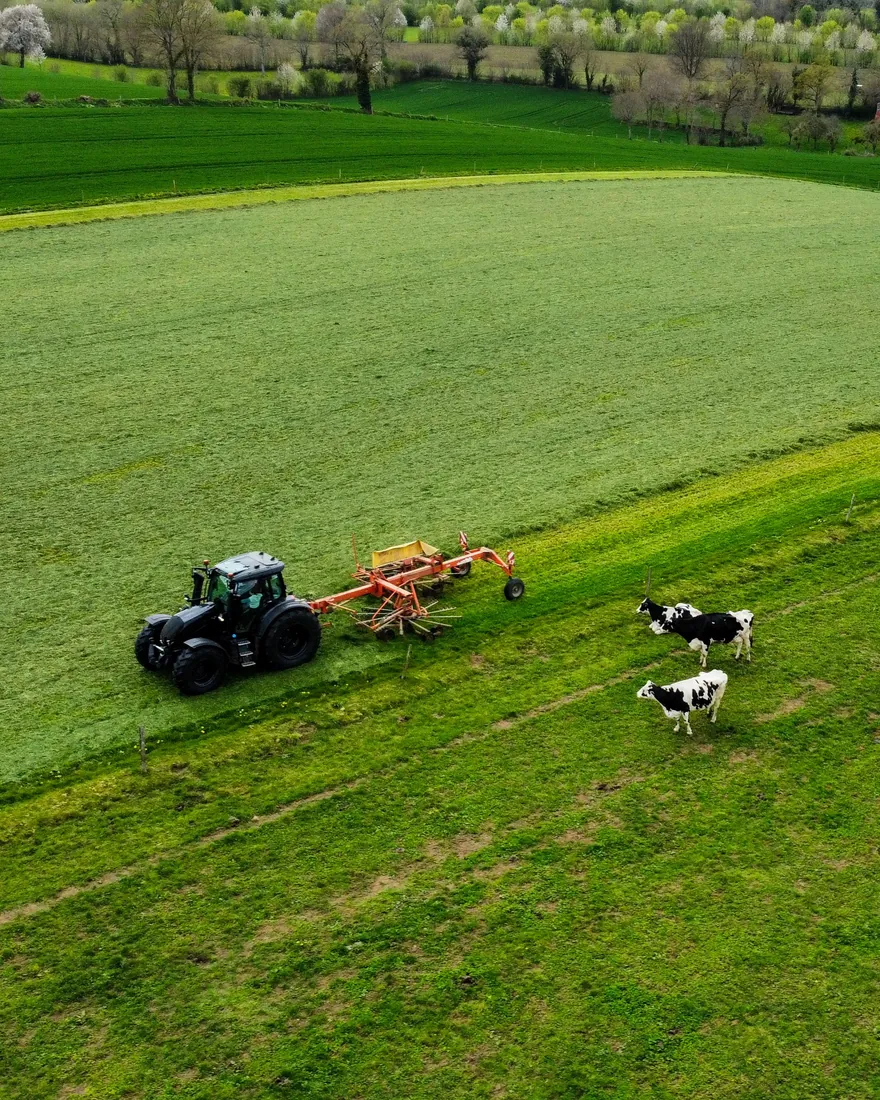
Agricultural Businesses we help
Agricultural operations carry one of the most extreme cash-timing mismatches of any industry: input costs (seed, fertilizer, fuel, labor) and equipment financing are due on a fixed schedule, while revenue is often concentrated in a narrow window around harvest — and weather can move or shrink that window with no notice. A daily-debit MCA product, built around steady card-swipe businesses, fits this revenue pattern especially poorly.
The patterns we see most often:
- Daily MCA debits against seasonal revenue. A financing product structured for daily repayment is a fundamental mismatch for a business whose revenue arrives in a concentrated seasonal window.
- Equipment financing stacked with MCA debt. Large capital equipment — tractors, combines, irrigation systems — carries its own financing that becomes unworkable once a daily MCA debit is layered on top.
- Input costs due before revenue exists. Seed, fertilizer, and fuel have to be purchased and paid for well before a harvest generates any income, creating exactly the cash gap MCA brokers target.
- Weather and yield volatility. A weak season or a delayed harvest can push expected revenue back or shrink it — a risk a fixed daily debit does not adjust for at all.
Why agricultural business owners work with us
Agricultural businesses are a poor structural fit for merchant cash advance products, but that hasn't stopped aggressive marketing into the industry — the appeal of fast funding against future revenue is pitched regardless of whether the repayment schedule makes sense for a harvest-cycle business.
We are not a lender and we are not paid on commission. We are paid by you, on a flat fee, to look at your full position — every open MCA, equipment financing, input-cost obligations, and your actual harvest and revenue calendar — and tell you honestly what your options are.
Sometimes the answer is restructuring MCA debt onto a schedule that matches your harvest cycle rather than a daily debit. Sometimes it's refinancing equipment debt separately from working capital. Sometimes the honest conversation is about settlement. Our job is to give you that picture clearly, not to sell you a product.
How a consultation works
Step 1 — Position review. We map every open MCA, equipment note, and input-cost obligation against your actual harvest and revenue calendar.
Step 2 — Options modeling. We model realistic paths — restructuring onto a schedule that matches your revenue cycle, refinancing equipment separately, or settlement on specific positions — with costs, timelines, and risks.
Step 3 — Written decision framework. You leave with a written plan that fits your priorities: getting through the next season, preserving equipment, or protecting a personal guarantee.
What agricultural business owners should know about the law
A few realities are worth understanding before you negotiate anything existing. The U.S. Small Business Administration generally suggests total debt service should not exceed roughly 30% of gross revenue for a small business — for a seasonal agricultural operation, a daily MCA debit sized against a single strong month can consume an unsustainable share of revenue during the rest of the year.
If your operation has stacked more than one advance to bridge successive lean seasons, our guide to evaluating an MCA stack walks through the questions worth answering before you negotiate with any funder. None of this is legal advice — it's context for sharper questions to your attorney.